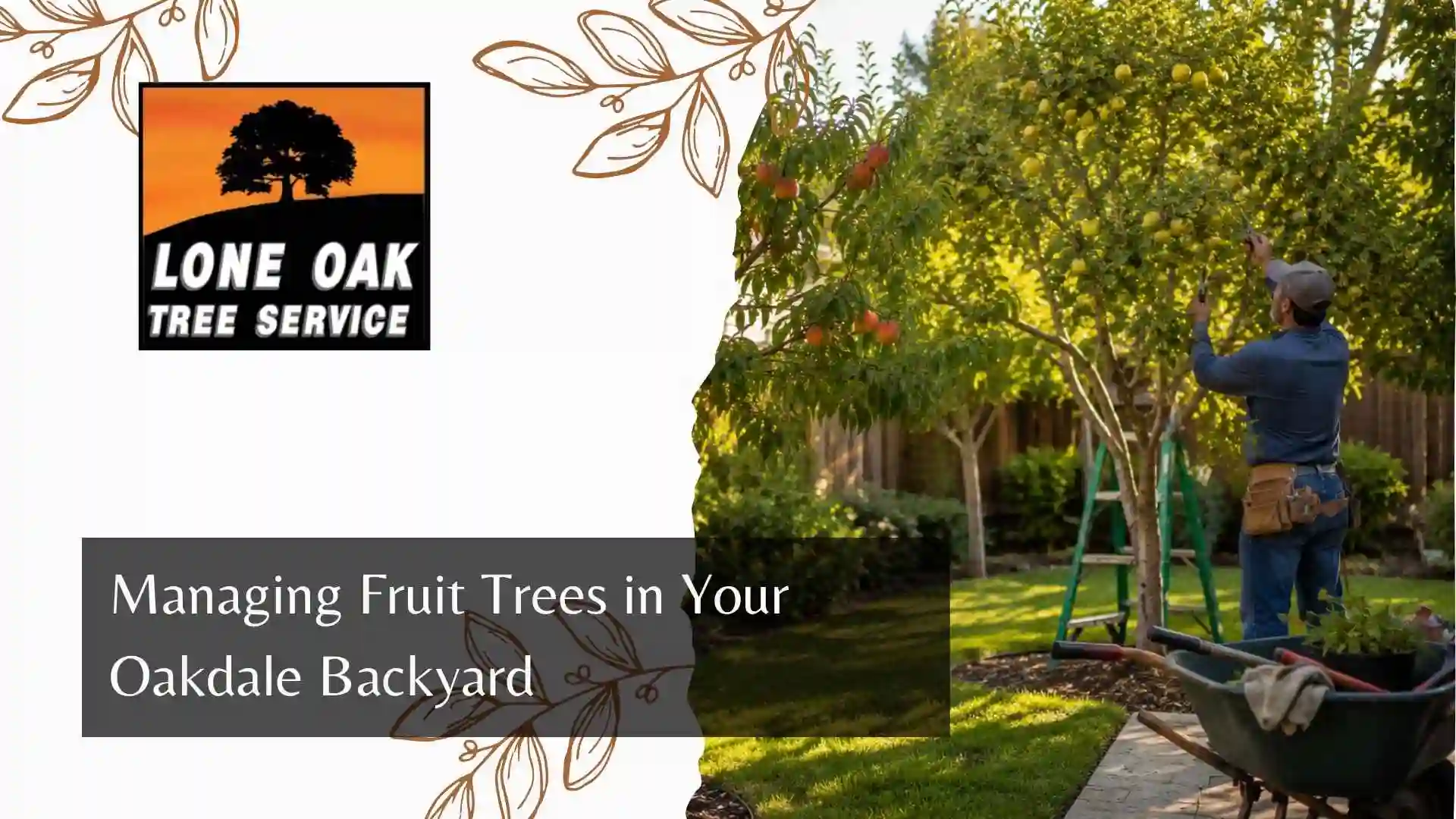
Oakdale homeowners often rely on backyard fruit trees for shade, beauty, and seasonal harvests, but Central Valley heat, dry conditions, pests, disease, poor drainage, and soil problems can gradually weaken them. Oakdale Fruit Tree Health Assessments help homeowners identify those problems before visible decline becomes severe. Lone Oak Tree Service’s Tree Health Assessment service provides professional evaluations that examine the tree itself as well as the surrounding soil, root zone, canopy, drainage, sunlight, and environmental conditions.
A healthy-looking fruit tree is not necessarily a healthy tree. Problems affecting roots, branches, or internal structure can develop long before a homeowner notices major symptoms. Professional assessment gives Oakdale property owners a clearer understanding of what is happening and whether the appropriate response is treatment, pruning, soil improvement, pest management, or removal.
Why Oakdale Fruit Trees Need Regular Attention
Fruit trees are living systems that depend on healthy roots, adequate nutrients, proper moisture, and balanced growth.
Oakdale’s Central Valley environment can place additional stress on trees. Long periods of heat and dry weather can affect water availability, while seasonal winds and storms can expose weak branches and structural defects. Lone Oak Tree Service notes that Oakdale trees can experience stress from hot summers, dry conditions, seasonal winds, and occasional storms.
A fruit tree may continue producing leaves or fruit while developing a problem underneath the surface.
That is why waiting for a tree to look severely damaged is not always the best approach.
Early Symptoms Can Be Easy to Miss
Changes such as leaf discoloration, premature leaf drop, declining growth, dead branches, or cracks in the trunk can indicate that a tree is under stress.
Lone Oak Tree Service’s health assessment process specifically looks for early signs of stress or disease and evaluates everything from the root zone through the canopy.
Early identification can provide more opportunities to correct the problem before the tree experiences significant decline.
What a Fruit Tree Health Assessment Looks At
A professional assessment should go beyond simply looking at the leaves.
Lone Oak Tree Service evaluates multiple aspects of tree health, including pests, fungal infections, structural issues, and environmental stressors. The company also considers soil quality, drainage, sunlight, and competition from nearby vegetation.
This broader approach matters because the visible symptom may not be the actual cause.
Canopy Condition
The canopy can provide important clues about a tree’s overall condition.
Sparse growth, unusual discoloration, dead branches, or premature leaf drop may indicate stress or disease.
A professional can examine the distribution and condition of branches rather than treating one affected limb as an isolated problem.
Trunk and Branch Structure
Cracks, damaged bark, weak branches, and other structural abnormalities can affect both tree health and property safety.
A professional assessment can help determine whether a structural problem requires pruning, additional treatment, monitoring, or more extensive action.
Root Zone and Soil
A fruit tree’s health begins below ground.
Compacted soil, poor drainage, inadequate moisture, and other root-zone problems can affect the tree even when the canopy initially looks healthy.
Lone Oak Tree Service specifically includes the root zone and surrounding environmental conditions in its assessments.
A Typical Oakdale Fruit Tree Problem
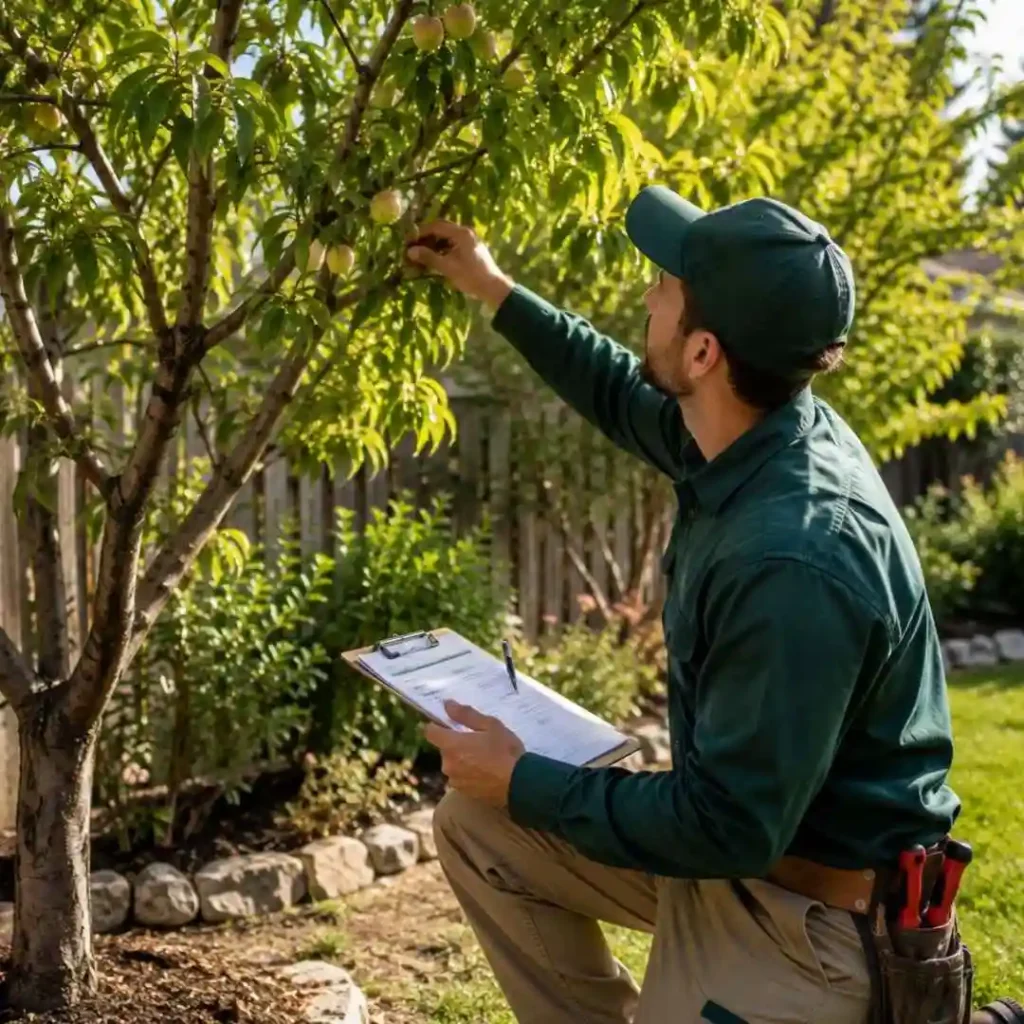
Consider an Oakdale homeowner who notices that one of the fruit trees in the backyard is producing less vigorous growth than it did in previous seasons.
At first, the homeowner assumes the tree simply needs more water.
After additional watering does not solve the problem, they notice yellowing leaves, a few dead branches, and changes in the tree’s overall appearance.
Instead of immediately removing the tree or applying an unverified treatment, the homeowner schedules a professional tree health assessment.
The technician examines the canopy, trunk, branches, root zone, and surrounding environment. The assessment also considers possible pests, disease, drainage, soil conditions, and other sources of stress.
The homeowner receives a clearer explanation of the tree’s condition and recommendations based on what the inspection reveals.
This is an illustrative scenario rather than a specific Lone Oak Tree Service customer case. It demonstrates why professional diagnosis is valuable when a fruit tree begins showing several symptoms at once.
Why Professional Diagnosis Matters
A struggling fruit tree can have more than one contributing problem.
For example, poor drainage can affect roots, while environmental stress can make a tree more vulnerable to pests or disease.
Treating only the most visible symptom may not solve the underlying issue.
Lone Oak Tree Service takes an environmental approach to tree health assessments, looking beyond the tree itself to understand conditions affecting its health.
Avoid Guessing at the Cause
A homeowner might see yellow leaves and assume the tree needs fertilizer.
Another might see dead branches and assume the entire tree is dying.
Neither conclusion can be made reliably from one symptom alone.
Professional evaluation helps distinguish between possible causes and creates a more appropriate plan.
Protect Nearby Trees
Problems affecting one tree can sometimes create concerns for surrounding vegetation.
Lone Oak Tree Service notes that early diagnosis can help prevent damage to nearby trees or structures.
That makes assessment particularly useful when several fruit trees grow close together in the same backyard.
Common Warning Signs in Oakdale Fruit Trees
Homeowners should consider a professional assessment when they notice:
- Unusual leaf discoloration
- Premature leaf drop
- Sudden changes in growth
- Dead branches
- Cracks in the trunk
- Visible fungal growth
- Signs of pests
- Weak or damaged limbs
- Declining canopy density
- Problems appearing in multiple nearby trees
One symptom does not automatically mean a tree is dying.
However, several symptoms occurring together deserve professional attention.
Soil and Drainage Can Affect Fruit Tree Health
Homeowners sometimes focus entirely on the tree’s visible parts.
But soil conditions can have a major influence on long-term health.
Lone Oak Tree Service states that tree health is influenced by soil quality and drainage, along with sunlight and competition from surrounding vegetation.
This is especially important when a homeowner is trying to determine why a tree is struggling despite apparently receiving adequate care.
Poor Drainage
Excess moisture around roots can create unfavorable conditions for some trees and may contribute to root problems.
A professional assessment can help determine whether drainage should be considered as part of the overall diagnosis.
Soil Conditions
Soil may also require attention when a tree is not thriving.
Depending on the assessment, Lone Oak Tree Service may recommend measures such as soil amendments, along with pruning or pest management.
The important point is that treatment should follow diagnosis rather than guessing.
Professional Tree Care Can Preserve Valuable Fruit Trees
A mature fruit tree can be an important part of a backyard landscape.
Removing it may mean losing years of established growth and replacing it with a young tree that requires considerable time to mature.
That is why Lone Oak Tree Service’s approach focuses on preserving trees when practical rather than automatically recommending removal.
The company states that many struggling trees can be restored with proper care, including soil amendments, targeted pruning, or pest management. Its recommendations are based on the long-term health of the landscape rather than unnecessary work.
When Pruning Becomes Part of the Solution
A health assessment may reveal that certain branches need to be removed.
Professional pruning can remove dead or diseased limbs, improve airflow, reduce unnecessary weight, and allow more sunlight to reach parts of the canopy.
However, pruning should be based on the tree’s condition and structure.
Over-pruning can create additional stress and alter the tree’s natural structure.
Lone Oak Tree Service emphasizes that its pruning work is designed around long-term tree health rather than simply cutting back branches.
Why DIY Fruit Tree Diagnosis Can Fall Short
A homeowner can observe leaves, branches, and fruit, but diagnosing a tree’s health often requires understanding how those symptoms relate to the root system, soil, structure, pests, disease, and environmental conditions.
A wrong diagnosis can lead to unnecessary pruning or inappropriate treatments.
Professional assessment reduces that guesswork.
Lone Oak Tree Service has more than two decades of combined professional tree-care experience, and its founder, Matt Hanko, has a background in soil science, environmental consulting, ornamental horticulture, plant identification, arboriculture, and landscape construction.
That combination of tree-care and environmental knowledge is particularly relevant when the cause of decline is not immediately obvious.
What Happens After an Assessment?
A health assessment should not leave the homeowner wondering what to do next.
Lone Oak Tree Service explains its findings in clear terms and provides realistic recommendations based on the tree’s condition. Possible recommendations can include treatment, pruning, soil amendments, pest management, or removal when necessary.
This gives homeowners a practical path forward instead of simply receiving a diagnosis without a plan.
Treatment When the Tree Can Be Saved
If a tree is struggling but can potentially recover, appropriate treatment may help improve its condition.
The exact recommendation depends on what caused the stress.
Removal When Safety Requires It
Not every damaged tree can or should be preserved.
If an assessment identifies serious structural weakness or a significant safety hazard, removal may ultimately be the responsible option.
Lone Oak Tree Service evaluates these situations carefully and prioritizes property safety while considering whether the tree can realistically be preserved.
Frequently Asked Questions
How do I know if my Oakdale fruit tree is unhealthy?
Warning signs can include leaf discoloration, premature leaf drop, dead branches, trunk cracks, fungal growth, pest activity, and reduced growth. Several symptoms together are a good reason to schedule a professional assessment.
What does a tree health assessment include?
Lone Oak Tree Service evaluates the root zone, canopy, pests, fungal infections, structural issues, soil quality, drainage, sunlight, and other environmental stressors.
Can a struggling fruit tree be saved?
In many situations, a struggling tree can potentially be restored with appropriate care. Depending on the diagnosis, recommendations may include soil amendments, targeted pruning, or pest management.
Should I remove a fruit tree that looks unhealthy?
Not necessarily. Professional assessment can determine whether the tree can be treated or whether its condition creates a safety concern that makes removal appropriate.
Does Lone Oak Tree Service provide tree health assessments in Oakdale?
Yes. Oakdale is specifically listed among the communities served by Lone Oak Tree Service, and tree health assessments are one of its professional tree-care services.
How can I schedule a tree health assessment?
Lone Oak Tree Service invites Oakdale homeowners to contact the company for a free estimate or to schedule a service. Its listed phone number is 209-247-6609.
Keep Your Oakdale Fruit Trees Healthy
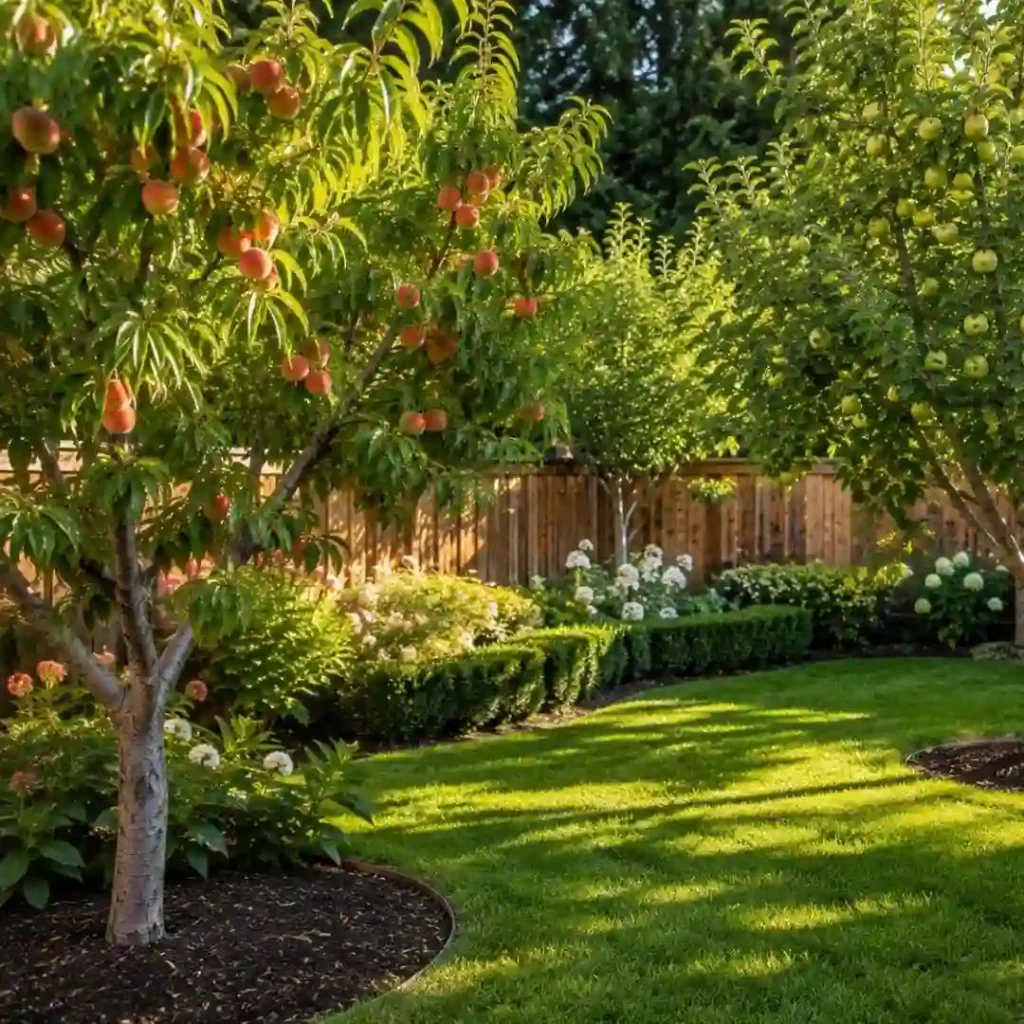
Managing fruit trees in an Oakdale backyard is about more than watering, harvesting, and removing the occasional dead branch. Trees can experience problems involving roots, soil, drainage, pests, disease, structure, and environmental stress long before serious decline becomes obvious.
A professional health assessment provides a more complete picture.
Lone Oak Tree Service evaluates the tree from the root zone through the canopy while considering the conditions around it. The company provides practical recommendations based on what it finds and focuses on preserving healthy trees whenever possible.
If a fruit tree in your Oakdale backyard has developed unusual leaves, dead branches, declining growth, fungal growth, or other warning signs, don’t wait for the problem to become severe. Call Lone Oak Tree Service at 209-247-6609 to schedule a professional tree health assessment and get a clear plan for protecting your backyard trees.