Oakdale homeowners value mature trees for shade, curb appeal, and property value. But in Oakdale’s long, dry summers and changing seasonal conditions, trees can decline gradually without obvious warning signs. What begins as a few yellow leaves or thinning branches can eventually become structural failure, disease spread, or costly property damage.
Identifying dying trees early is critical. Professional tree health assessments help homeowners understand whether a tree can be preserved, treated, or safely removed before conditions worsen.
Why Tree Health Problems Are Common in Oakdale
Oakdale’s climate creates unique stress conditions for residential trees. Extended periods of heat, inconsistent watering, compacted soil, and seasonal drought pressure on tree root systems and reduce overall vitality.
Many property owners assume visible symptoms appear immediately, but tree decline often begins below the surface.
Common local contributors include:
- Heat stress during extended dry periods
- Soil compaction reduces root oxygen
- Poor drainage in landscaped areas
- Pest activity and disease spread
- Construction damage to root zones
- Improper pruning practices
- Aging tree populations
Without a professional evaluation, minor symptoms may be mistaken for normal seasonal changes.
Early Warning Signs Your Tree May Be Dying
Unusual Leaf Changes
Leaves often reveal the earliest indicators of stress.
Watch for:
- Leaves are dropping outside the normal seasonal timing
- Browning around edges
- Smaller-than-normal leaf growth
- Sparse canopy development
- Sections of the tree failing to leaf out
These symptoms may indicate root problems, disease, or reduced nutrient flow.
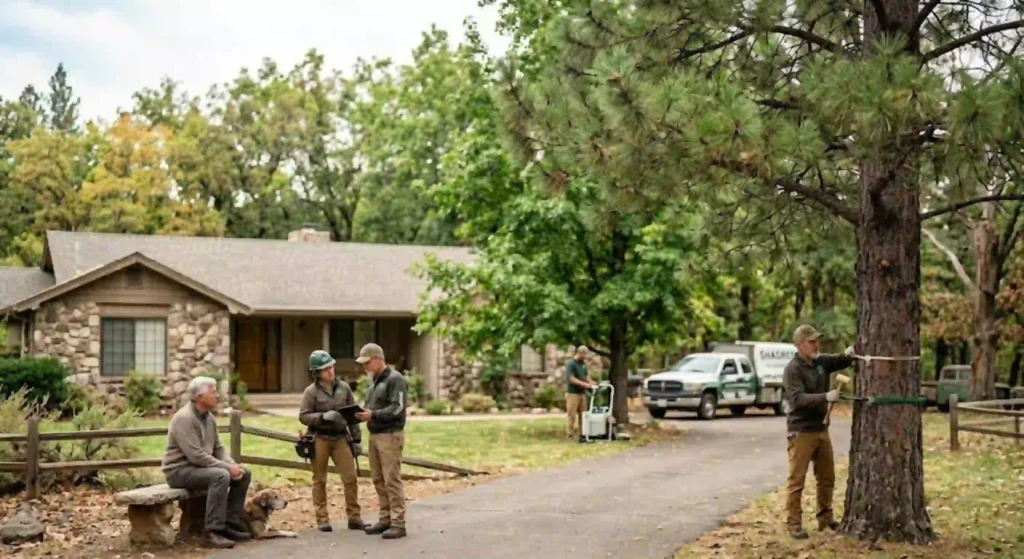
Dead or Brittle Branches
Dead branches are more than a cosmetic issue, they can signal internal decline.
Warning signs include:
- Branches snapping easily
- Missing bark
- No visible buds during growth season
- Entire sections appear dormant
Trees with extensive deadwood may already have compromised structural stability.
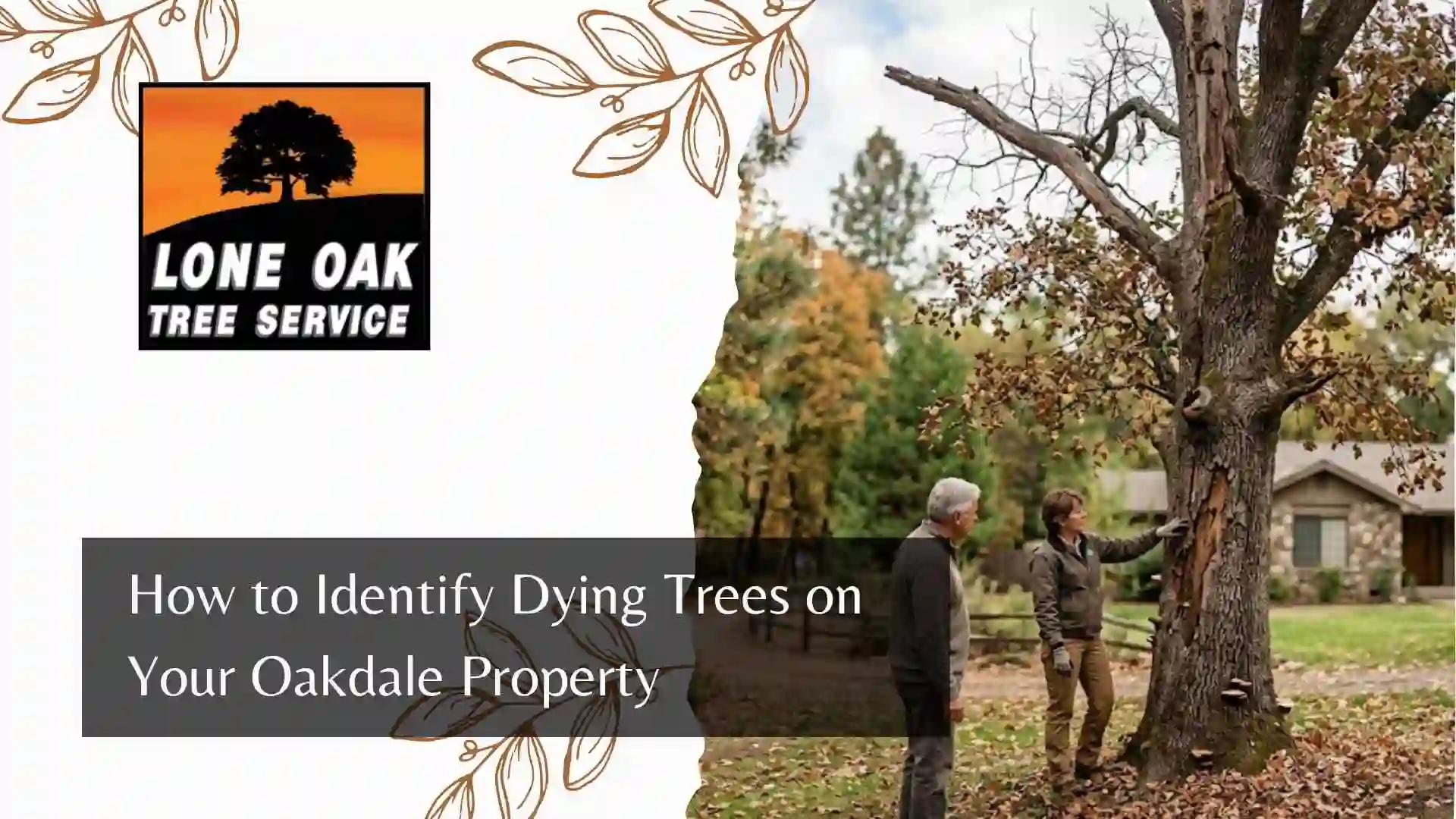
Bark Damage and Cracking
Healthy bark protects the tree from insects and environmental stress.
Signs of concern:
- Large vertical cracks
- Bark peeling away
- Soft or decayed sections
- Deep cavities
These symptoms can indicate internal decay that is not visible externally.
Root Zone Problems
Roots are responsible for water and nutrient transport.
Possible indicators:
- Raised soil around the trunk
- Fungus near roots
- Exposed roots
- Leaning appearance
- Soil erosion
Because root systems remain hidden, professional inspection is often necessary to determine actual health.
Job Story: When a Healthy-Looking Tree Was Actually Failing
A homeowner in Oakdale noticed scattered leaf loss on a mature shade tree near the driveway. At first, they assumed summer heat was responsible.
Weeks later, larger limbs began losing foliage, and cracks developed near the trunk.
A professional tree health assessment revealed underlying stress caused by root compaction and internal decay. The inspection identified multiple contributing factors affecting stability.
Because the issue was detected before complete failure occurred, the property owner was able to move forward with an informed treatment and safety plan instead of facing emergency removal and property damage.
This situation reflects a common challenge: tree decline frequently becomes visible only after internal damage has progressed.
Why Professional Tree Health Assessments Matter
Tree decline cannot be diagnosed accurately through visual inspection alone.
Professional tree health evaluations involve examining multiple factors together to determine the actual condition of the tree.
A professional assessment may include:
- Canopy condition review
- Trunk and bark evaluation
- Root health inspection
- Structural stability assessment
- Disease and pest indicators
- Environmental stress analysis
- Long-term management recommendations
Using a complete assessment approach allows homeowners to make decisions based on measurable tree conditions rather than assumptions.
The Professional Advantage Over DIY Tree Evaluation
Many homeowners search online and attempt to diagnose tree problems themselves.
Unfortunately, visual symptoms often overlap.
For example:
- Yellow leaves may indicate drought or root rot
- Branch dieback may indicate disease or soil stress
- Leaning may indicate growth patterns, or structural failure
Professional tree specialists understand how these variables interact.
Tree assessments require experience evaluating:
- Species-specific behavior
- Seasonal growth patterns
- Structural load conditions
- Environmental influences
- Long-term health projections
Attempting to guess can delay treatment and increase costs.
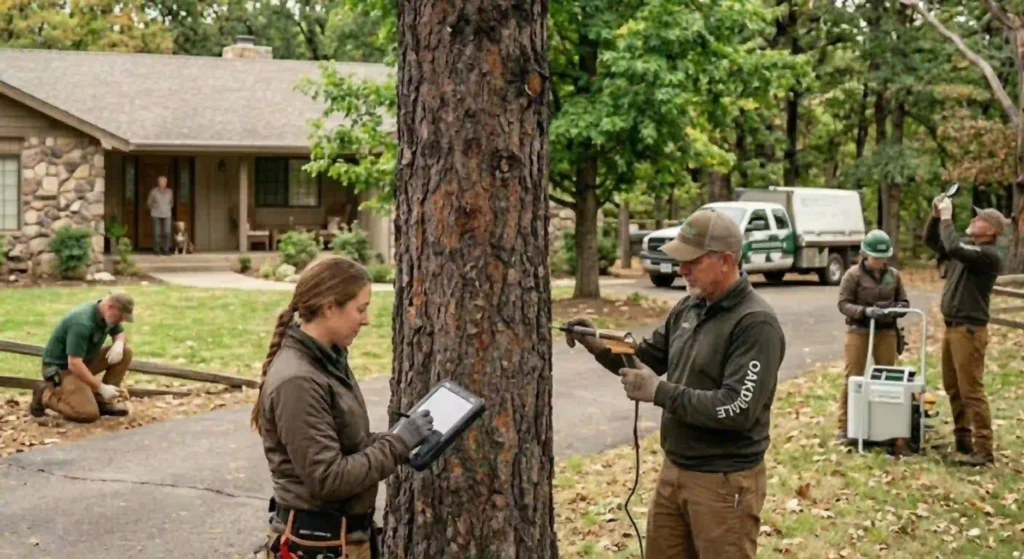
What Happens During a Tree Health Assessment
A structured tree evaluation provides homeowners with clear next steps.
Typical assessment process:
Initial Visual Inspection
Review of canopy density, trunk condition, and visible stress indicators.
Root and Soil Evaluation
Examination of surrounding conditions affecting stability and growth.
Risk Assessment
Identification of hazards to structures, vehicles, and nearby areas.
Action Recommendations
Guidance for preservation, treatment, monitoring, or removal if necessary.
This process helps prevent unnecessary work while protecting healthy trees.
When Oakdale Property Owners Should Schedule an Inspection
Consider scheduling a professional tree assessment if you notice:
- Large dead limbs
- Sudden leaning
- Leaf loss outside seasonal patterns
- Cracked trunks
- Root exposure
- Storm damage
- Slow seasonal recovery
Early intervention creates more opportunities for preservation.
Frequently Asked Questions
How do I know if my tree is dead or dormant?
Dormant trees usually maintain structural integrity and seasonal growth patterns. Dead trees often show brittle branches, bark separation, and canopy loss.
Can a dying tree recover?
Recovery depends on the underlying cause and how early problems are identified.
Is tree decline dangerous?
Potentially. Weak limbs and structural instability can create risks to people and property.
How often should trees be inspected?
Annual assessments are often beneficial, especially for mature trees or properties with multiple landscape trees.
Protect Your Oakdale Property with Expert Tree Assessment
If you’ve noticed unusual leaf loss, dead branches, bark damage, or changes in tree appearance, waiting can turn a manageable issue into a larger expense.
Professional tree health assessments provide clarity, identify risks early, and help protect the long-term value of your property.
Call to Action
Schedule a tree health assessment today to understand the condition of your trees and make informed decisions with confidence.