Oakdale’s mature trees are one of the area’s most valuable landscape features, but Central Valley heat, seasonal winds, and long dry periods can create dense canopies that place unnecessary stress on tree structure. Trees that become overcrowded often experience reduced airflow, uneven weight distribution, declining branch strength, and increased risk during storms.
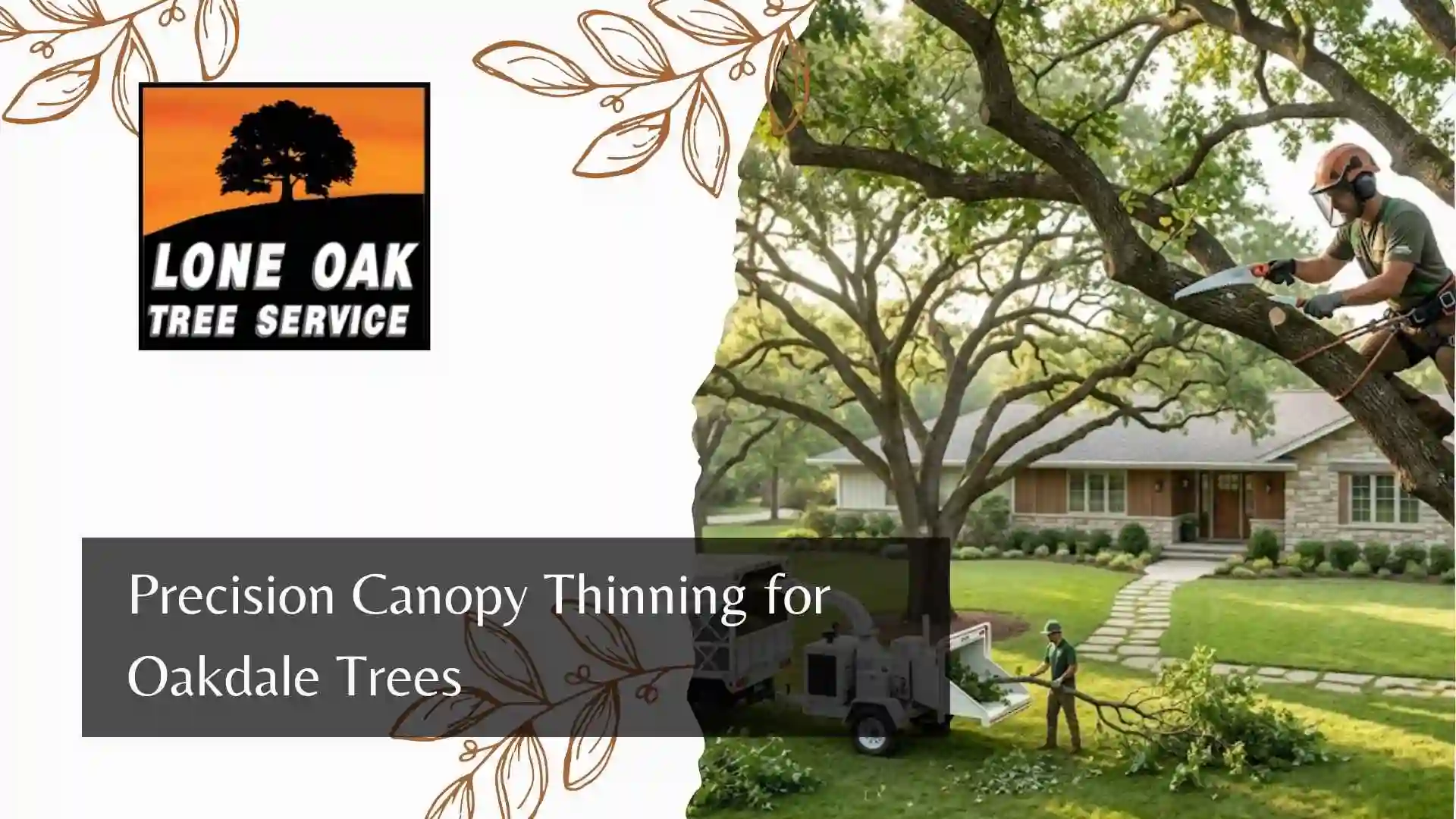
Precision canopy thinning helps restore balance while preserving the natural shape and long-term health of trees. Unlike aggressive trimming, professional canopy thinning focuses on selective branch removal to improve structure, sunlight penetration, and overall performance.
Why Oakdale Trees Commonly Develop Dense Canopies
Many Oakdale properties feature established trees that have grown for decades. Without ongoing maintenance, internal growth becomes crowded.
Common local contributors include:
- Long periods of summer heat
- Competition for moisture during dry conditions
- Seasonal wind exposure
- Heavy lateral branch growth
- Lack of routine pruning
- Storm-related structural stress
Dense canopies trap moisture, reduce light penetration, and increase branch load across major limbs. Professional thinning helps manage these conditions without damaging growth patterns.
What Is Precision Canopy Thinning?
Canopy thinning is the controlled removal of selected branches throughout the tree crown.
The goal is not to reduce tree size.
Instead, precision thinning aims to:
- Improve airflow through the canopy
- Allow sunlight to reach the interior growth
- Reduce excessive limb weight
- Remove dead or diseased growth
- Improve structural balance
- Lower branch failure risk
Professional trimming approaches prioritize tree health and avoid excessive cutting that can weaken recovery.
Job Story: Preventing Branch Failure Before Storm Season
An Oakdale homeowner noticed their backyard shade tree looked healthy, but had become noticeably heavier on one side. Branches extended over the roofline and blocked afternoon sunlight.
The homeowner considered renting cutting equipment and removing large limbs independently.
After evaluation, the professional assessment found:
- Uneven canopy loading
- Multiple dead internal branches
- Restricted airflow
- Excessive branch overlap
A precision canopy thinning plan was developed to selectively remove unnecessary growth while preserving natural structure.
The result was a healthier canopy with improved light penetration and reduced stress across primary limbs.
Most importantly, the homeowner reduced future storm-related branch risk without sacrificing tree appearance.
Why Professional Canopy Thinning Is Not a DIY Project
Many homeowners assume thinning means simply cutting back branches.
Tree care professionals approach thinning differently.
Proper canopy management requires evaluating:
Branch Weight Distribution
Removing too much from one area changes load patterns and can increase breakage.
Airflow Management
Selective removal improves circulation without exposing trees to excessive heat.
Species-Specific Growth
Different trees respond differently to pruning schedules and cut placement.
Long-Term Structural Health
Cuts influence future growth direction and branch attachment strength.
Industry guidance emphasizes pruning methods designed to support safe growth and preserve structural integrity.
Community arborist discussions also frequently warn against topping and excessive canopy reduction because poor cuts may create instability instead of improving health.
Benefits of Precision Canopy Thinning
Improved Tree Health
Removing dead and crowded growth allows trees to direct energy more efficiently.
Better Sunlight Penetration
Interior branches and surrounding landscapes receive more usable light.
Enhanced Storm Resistance
Balanced canopies reduce stress during seasonal winds.
Increased Safety
Managing heavy limbs lowers the likelihood of branch failure.
Improved Appearance
Selective thinning enhances tree form without creating an unnatural look.
Professional pruning services prioritize preserving natural structure rather than over-pruning.
Signs Your Oakdale Trees May Need Canopy Thinning
Watch for these indicators:
- Dense interior branch growth
- Branches hanging over roofs
- Reduced sunlight below trees
- Dead internal limbs
- Trees appearing unbalanced
- Branches rubbing together
- Excessive shade affects nearby plants
Ignoring these signs can lead to greater stress and more expensive corrective work later.
What Happens During Professional Tree Thinning
A professional canopy thinning visit typically includes:
Tree Evaluation
Reviewing overall health and growth patterns.
Hazard Identification
Locating overloaded, damaged, or interfering limbs.
Precision Trimming
Removing selected branches while preserving structure.
Site Cleanup
Leaving the property clean and usable after service.
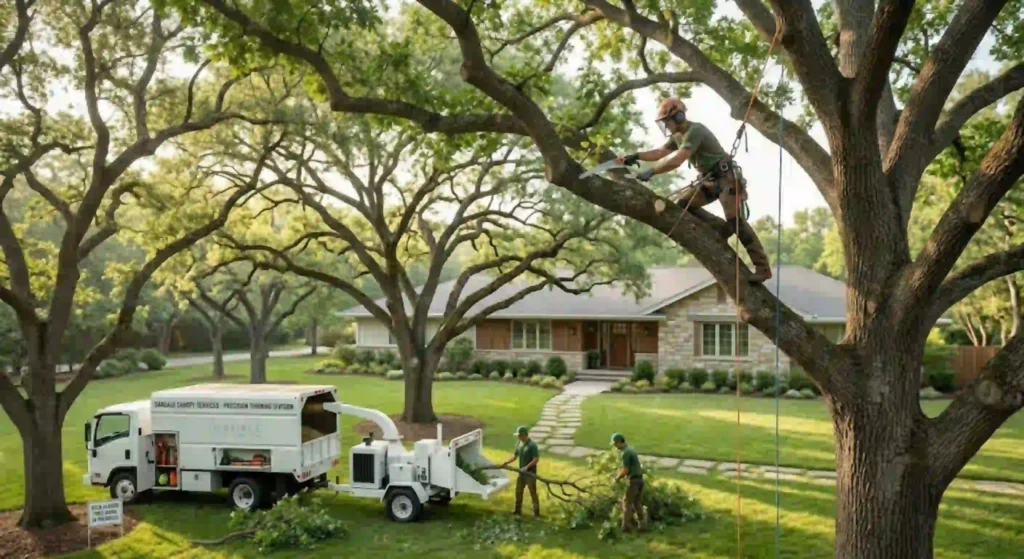
Professional crews use specialized tools and safe work practices designed for mature trees and surrounding property protection.
Frequently Asked Questions
Does canopy thinning make trees weaker?
No. Proper thinning removes stress points while maintaining healthy branch structure.
How often should trees be thinned?
Frequency depends on species, age, and growth conditions.
Is canopy thinning the same as topping?
No. Topping removes large portions of growth and may harm tree health, while canopy thinning selectively manages structure.
Can thinning improve storm protection?
Balanced canopies are generally less vulnerable to heavy winds and branch failure.
Schedule Precision Canopy Thinning for Your Oakdale Property
Healthy trees require more than occasional cutting. Precision canopy thinning supports safer growth, healthier structure, and long-term landscape value.
Call to Action
If your trees appear overcrowded, uneven, or increasingly difficult to manage, schedule a professional assessment and request a quote to help protect your Oakdale property.