Leaning trees can be more than just a landscaping concern; they can become serious safety hazards if not addressed promptly. In the Oakdale–Modesto region, where seasonal storms, winds, and drought-stressed soil are common, trees can start leaning suddenly or gradually over time.
Fortunately, not every leaning tree requires removal. In many cases, emergency cabling can provide the structural support needed to stabilize the tree, protect your property, and extend its lifespan safely. This technique is especially effective when performed by trained professionals who understand tree biomechanics and safety standards.
1. Understanding Why Trees Lean
Trees can lean for many reasons, and not all leans are immediately dangerous. However, identifying why a tree is leaning is crucial to determining whether emergency cabling is the right solution. Common causes include:
- High winds or storm damage
- Shallow or weakened root systems
- Soil erosion or shifting ground
- Improper pruning or canopy imbalance
- Rapid growth toward sunlight (phototropism)
A newly leaning tree after a storm is often more at risk than a tree that has grown with a slight lean over many years. Recognizing the difference can help prevent costly damage.
2. Why Emergency Cabling Works
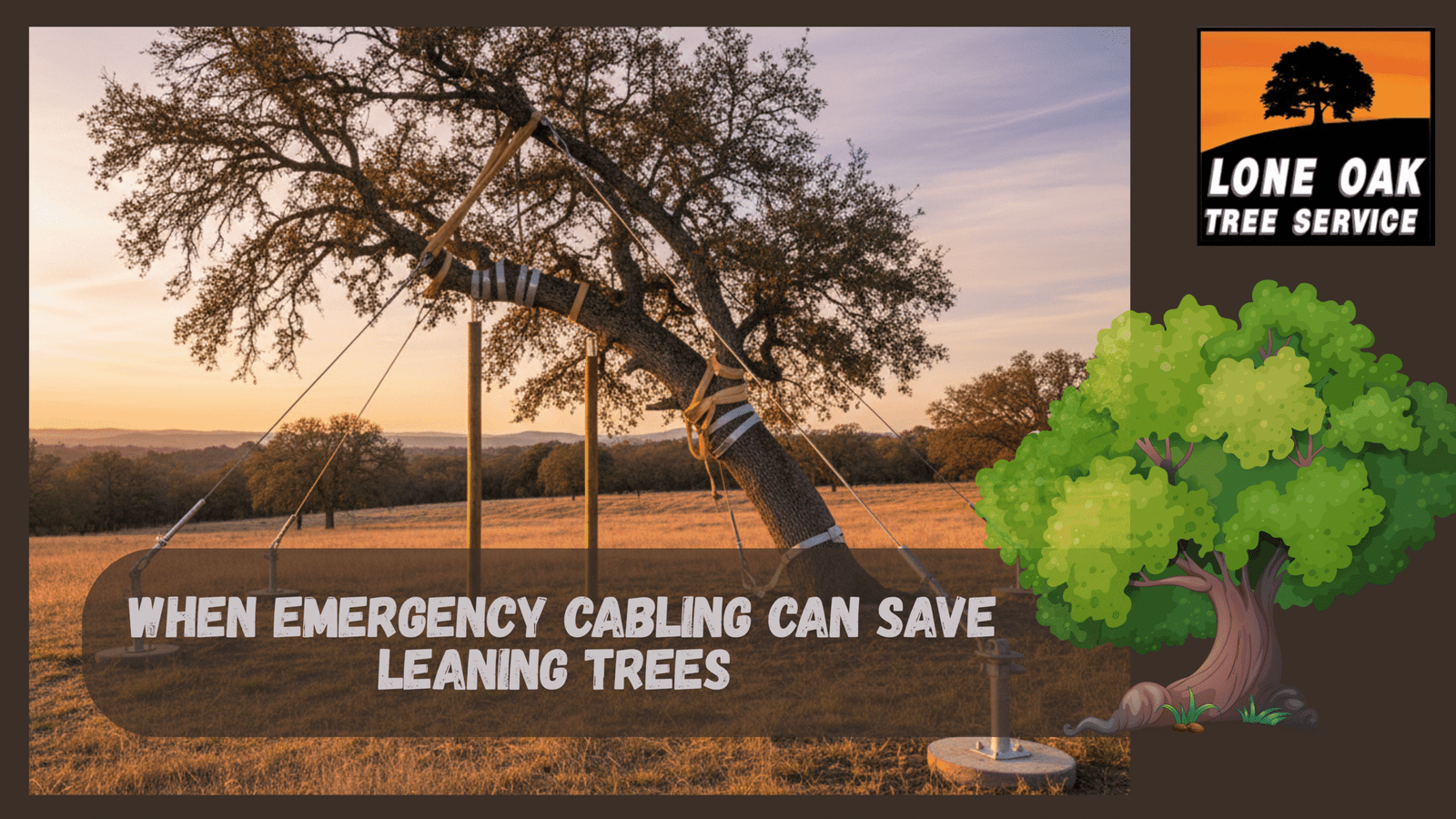
Emergency tree cabling involves installing high-strength steel cables or synthetic support systems between major limbs or from the trunk to stable anchor points. This provides added stability and load distribution, preventing further leaning or breakage.
Key benefits of cabling include:
- Immediate structural support to reduce stress on roots and limbs
- Stabilizing leaning trees without immediate removal
- Protecting property and people from falling limbs
- Extending the tree’s life and preserving landscape value
This method is particularly effective for mature trees or historically significant trees that homeowners want to preserve safely.
3. Signs Your Leaning Tree Might Need Cabling
Not every leaning tree requires cabling, but certain signs indicate a higher risk of failure:
- Recently, sudden leaning (especially after a storm)
- Cracks in the trunk or major limbs
- Soil lifting or root plate heaving on one side
- Exposed roots or separation from the ground
- Large canopies that create wind resistance
- Leaning toward structures, driveways, or walkways
If you notice these warning signs, it’s best to call a professional arborist immediately to assess whether emergency cabling can stabilize the tree.
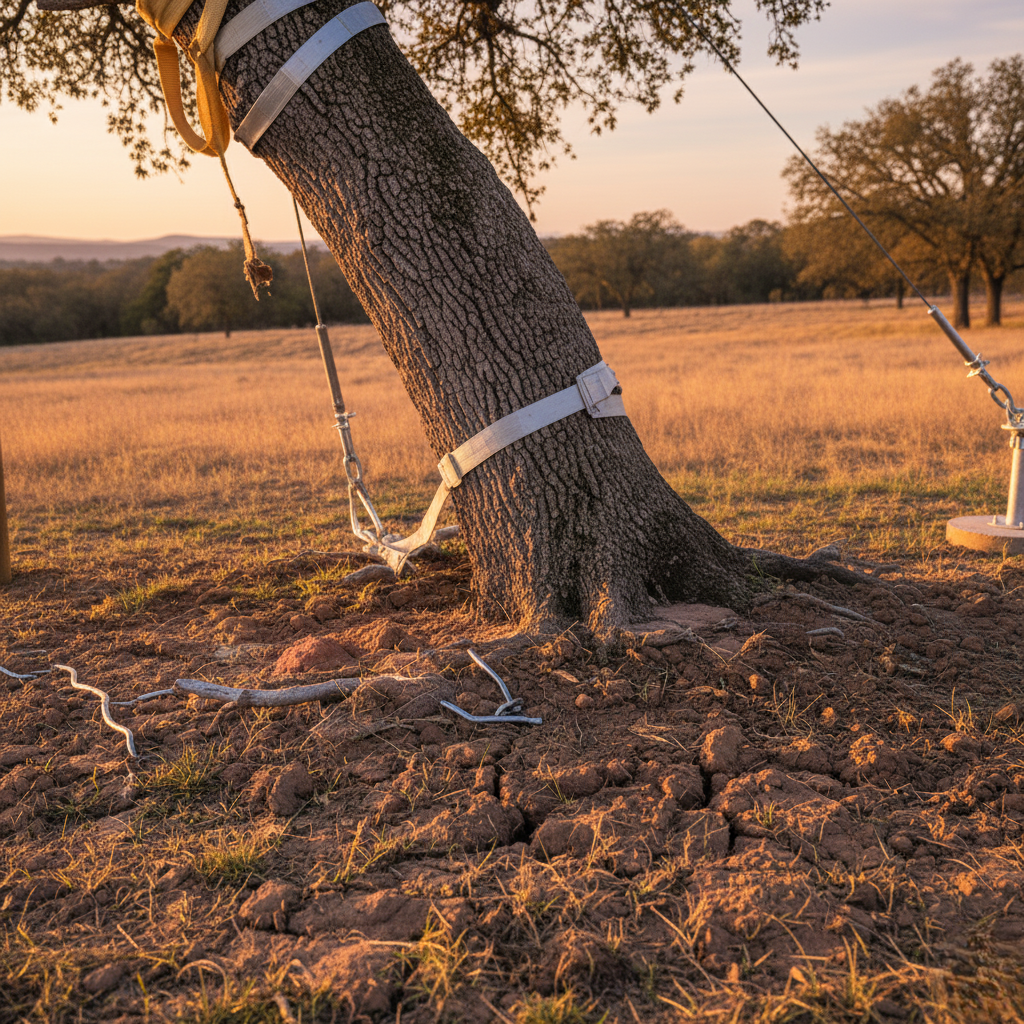
4. When Cabling Is a Safer Alternative to Tree Removal
Tree removal isn’t always the best or most affordable option. In many Oakdale–Modesto properties, cabling provides a cost-effective alternative that allows you to keep your tree while mitigating safety risks.
Cabling may be the preferred choice if:
- The tree is otherwise healthy but structurally stressed.
- It’s a valuable shade or ornamental tree that enhances curb appeal.
- The lean is moderate and hasn’t caused root failure.
- You want to avoid the cost and disruption of removal and stump grinding.
Of course, a certified arborist should always make the final call on whether the tree can be safely saved.
5. How Emergency Cabling Works Step-by-Step
Professional emergency cabling typically follows a carefully planned process to ensure both safety and effectiveness:
- Assessment – An arborist inspects the lean, root stability, and canopy structure.
- Strategic Planning – Determining where cables should be installed for maximum support.
- Installation – High-strength steel or synthetic cables are secured at the right height and tension.
- Load Distribution – The tension is carefully adjusted to reduce stress without damaging the tree.
- Follow-Up Maintenance – Regular inspections ensure the system remains effective over time.
This precise method can keep your tree upright and stable for many years, sometimes for the rest of its natural life.
6. Ideal Trees for Emergency Cabling in Oakdale – Modesto
Not all trees respond equally well to cabling. Common tree species in the Oakdale–Modesto area that often benefit from this support method include:
- Valley Oak
- Coast Live Oak
- Sycamore
- Liquidambar (Sweetgum)
- Modesto Ash
- Elm and Maple varieties
These trees are large, long-lived species that can lean over time due to wind exposure or root stress. Cabling can help them remain stable and healthy for decades.
7. Why DIY Cabling Is Not Recommended
While some homeowners might consider installing cables themselves, DIY cabling can be dangerous and ineffective without the proper equipment and expertise. Risks include:
- Incorrect cable placement is causing further instability
- Over-tightening, which can damage the tree’s structure
- Using the wrong materials can lead to cable failure
- Climbing accidents or personal injury
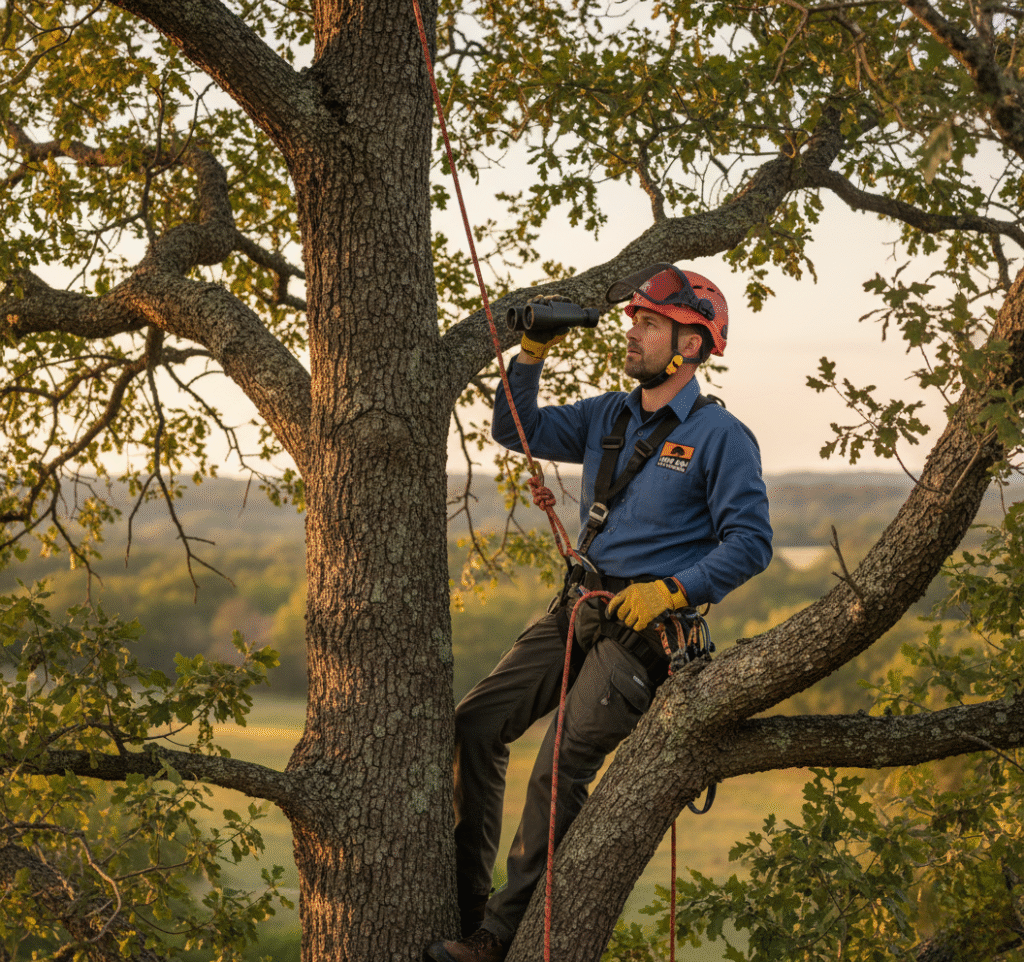
Professional arborists use industry-standard hardware and follow ANSI A300 tree care standards to ensure your tree is stabilized safely and effectively.
8. Emergency Cabling vs. Bracing: What’s the Difference?
Cabling isn’t the only support technique available. In some cases, bracing is used alongside or instead of cabling:
- Cabling: Installed higher in the canopy to limit movement and support branches.
- Bracing: Installed lower, typically with rods through the trunk or major limbs to add rigid support.
For many leaning trees, a combination of both methods provides the strongest, safest solution.
9. Why Timely Action Matters
When a tree starts leaning, time is critical. The longer the lean progresses, the more stress builds on the root system and structural integrity. Waiting too long can make cabling ineffective and increase the likelihood that the tree will need to be removed entirely.
Early intervention allows for:
- A higher chance of tree preservation
- Lower costs compared to removal
- Better property protection
- A safer environment for your family and neighbors
10. Professional Tree Care Makes the Difference
Working with a certified arborist ensures your leaning tree is handled properly and safely. Experienced tree care professionals:
- Accurately assess tree structure and risk level
- Determine the best stabilization method
- Install industry-standard cabling systems
- Provide ongoing maintenance and inspection
In the Oakdale–Modesto region, professional emergency cabling services can mean the difference between losing a mature tree and enjoying its shade for years to come.
Call to Action
If you’ve noticed a tree on your property starting to lean, don’t wait until it becomes a hazard. Our certified tree care team specializes in emergency cabling and stabilization to protect your property and preserve your trees. Contact us today to schedule a professional inspection and give your tree the support it needs to thrive safely.